
Boulder County Bench Warrants Explained
A bench warrant brings someone before the judge. It does not open a new case. It means a required step in an existing case was missed and the judge wants the person present. Boulder County triggers run from a failure to appear or failure to comply to an unpaid court obligation, a missed review, or violation of an order. The warrant allows arrest. Its purpose is getting the original case back in front of the judge. Labels matter here. The Twentieth Judicial District uses the phrases bench warrant, failure to appear, and failure to comply. Colorado sources skip capias pro fine, a Texas phrase. Ask for the full record, which should show which Boulder County court entered the order, why it arose, whether bond is set, and whether a later event recalled or canceled it.
Boulder County Missed Court Path
Missed hearings in Boulder County take no single path. The judge may review the record, issue a warrant, set bond or no bond, and direct law enforcement service. A docket or register of action may show the warrant event later. So call the issuing clerk. Ask for the status, the next authorized date, and whether the case can go on a walk-in docket. Cities raise the stakes. Longmont's traffic materials warn that a missed arraignment can bring default judgment on a traffic infraction plus a warrant for arrest. The Longmont citation page shows the summons itself lists the date, time, and place to appear, so Boulder County readers can confirm both before acting.
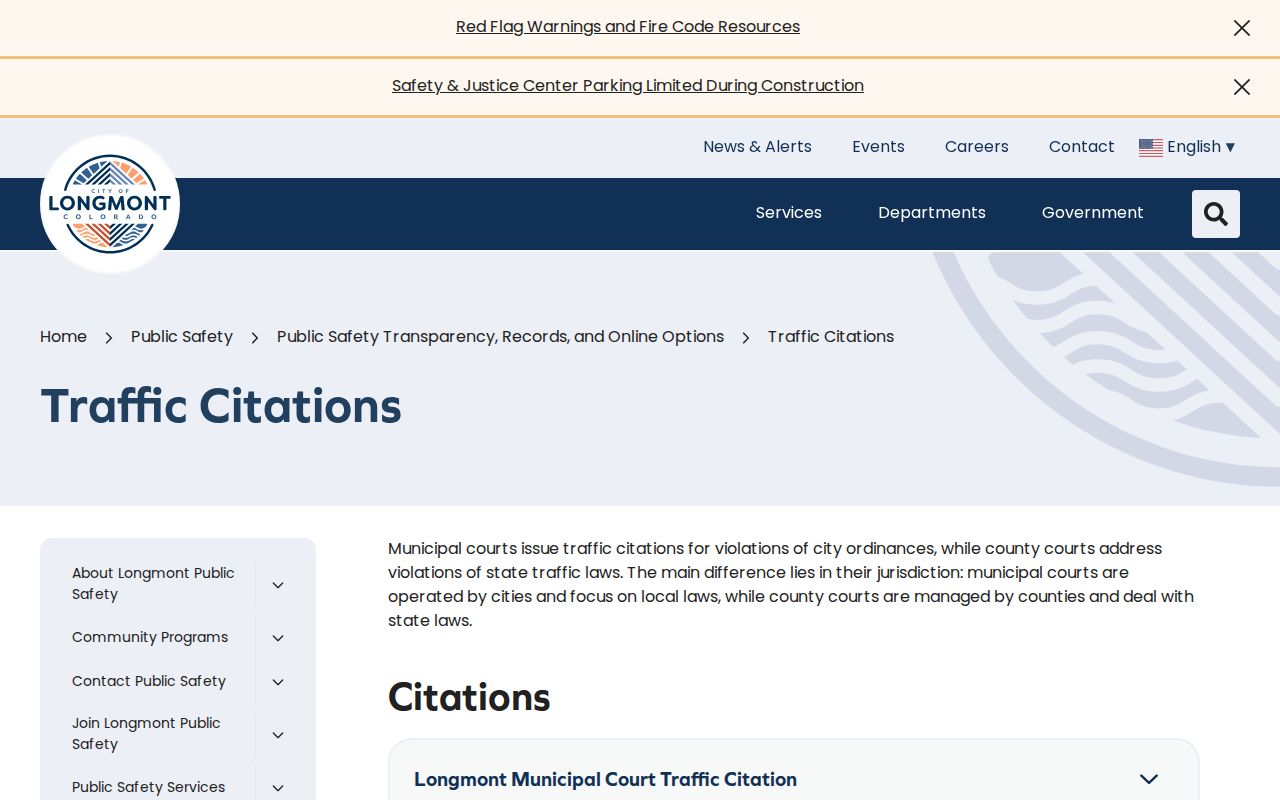
The summons names the court, so Boulder County readers read it first.
How Boulder County Bench Warrants Are Issued
Every warrant starts inside an existing case. Someone misses a setting or skips a condition. The judge or magistrate reviews the file and signs an order. The clerk records it. The Sheriff or an authorized police agency then receives the Boulder County warrant for service, and later entries record any appearance, bond, arrest, recall, or quash.
- Identify the missed setting or unmet court condition.
- Call Boulder County Courts at 303-441-3750 for a district or county case.
- Ask for the issuing division, warrant type, status, and bond condition.
- Confirm walk-in eligibility and the assigned day before appearing.
- Attend the ordered setting and obtain the next date in writing.
- Ask when the warrant status will show as recalled, quashed, served, or canceled.
Boulder County's walk-in route skips municipal warrants; a city judge handles those.
Boulder County Walk-In Warrant Schedule
The Twentieth Judicial District walk-in procedure posts exact same-morning add-on times. District Division 4 reports Wednesday at 8:00 a.m. for 8:15. Division 6 comes Thursday at 8:00 for 8:15. Divisions 12 and 13 report Wednesday at 8:00 for 8:15 and 9:00 settings. Boulder County Court reports Thursday at 8:00 for 8:30. Longmont County Court takes Thursday at 8:00 at 1035 Kimbark Street for 8:30. The clerk assigns the rotation. Call before you go. The wrong day can mean being told to return, and the no-arrest protection at the clerk counter does not reach every warrant in Boulder County.
Important: municipal, outside-jurisdiction, Victim Rights Act, affidavit, and specified no-bond alternative-jail warrants are excluded from the walk-in procedure.
Bench Warrants and Arrest Warrants Compared
Bench warrants and arrest warrants both authorize custody. They just begin differently. A bench warrant is court-compliance process in an existing case, while an arrest warrant usually starts with a sworn complaint or affidavit and a judicial finding of probable cause. That origin decides whether a Boulder County walk-in appearance or clerk bond route is open to you.
| Point | Bench warrant | Arrest warrant |
|---|---|---|
| Typical cause | Missed date or unmet order | Probable-cause complaint or affidavit |
| Case stage | Existing court case | Charging or investigation stage |
| Walk-in possibility | Some district or county FTA cases | Affidavit warrants excluded |
| Service | Sheriff or authorized police | Sheriff or authorized police |
| Resolution | Appearance, recall, quash, bond | Arrest, surrender, bond, advisement |
A summons asks you to appear without authorizing arrest. Skip it, and a Boulder County bench warrant may follow.
Boulder County Municipal Bench Warrants
City warrants run on their own track. Boulder Municipal Court tells people with a warrant to call 303-441-3030 and schedule a judge appearance, which may quash it. Its warrant line is 303-441-1840. Longmont uses 303-774-4804 and court@longmontcolorado.gov. Lafayette, Erie, and Louisville each use their own clerk, and the Longmont Municipal Court page maps the Safety and Justice Center route for city cases in Boulder County.
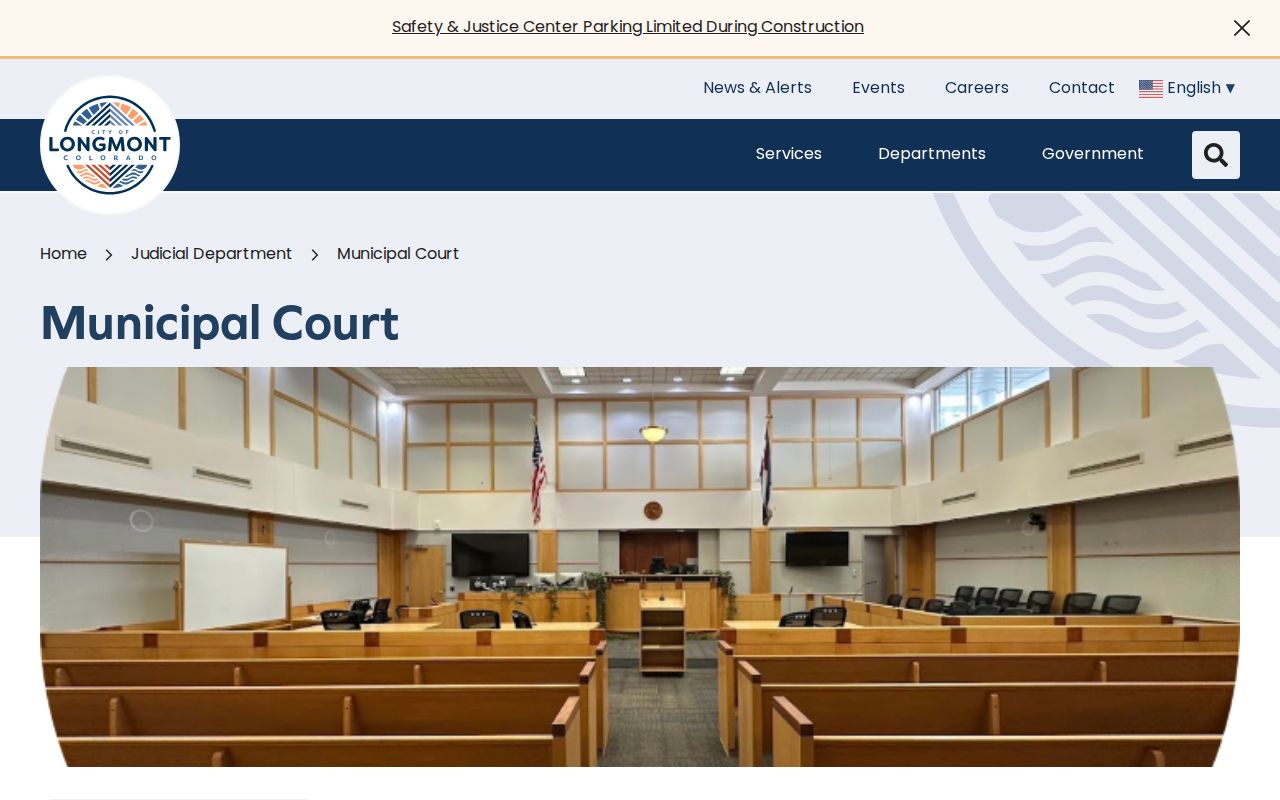
Courts guard their own orders. A city judge cannot quash a state warrant from the Twentieth Judicial District. Nor the other way. A Boulder County walk-in clerk cannot clear a Longmont municipal order. Longmont also publishes a selected most-wanted page. The official program notice shows a limited public-safety purpose, and the page is not a bench-warrant search that can rule out a city or county order.
A most-wanted page proves nothing either way. Boulder County residents checking their own status should call the issuing court.
Resolving a Boulder County Bench Warrant
Start with the issuing court and a lawyer. Ask the judge for walk-in court, a set hearing, a motion, or bond. Never assume paying a balance lifts the order. Only a judge or authorized court process can change warrant status. Save receipts. Keep the written next date too. CJO 25-101 lets a Twentieth Judicial District clerk take certified-funds appearance bonds on some monetary failure-to-appear and failure-to-comply warrants. It covers traffic, misdemeanor, and lower-class felony cases, while affidavit warrants stay with Boulder County Sheriff arrest processing.
Resolution check: bond can change custody status, but the original case and future hearing remain open until the court resolves them.
Once an order is confirmed, the Boulder County warrant records home lays out the full agency list and the bond route.
Boulder County Consent of Surety
The Boulder County walk-in document says some cases require consent of surety. The surety is whoever stands behind the bond. If a new appearance changes bond terms, the court may want proof the surety agrees to them. Ask the clerk first. Learn which form or signature is needed before the assigned date. Do not assume the requirement applies just because a bondsman was used in Boulder County. The case record and the court's own instructions control. Bring identification, the case number, any prior bond paperwork, and any written court directions. A complete packet means fewer return trips. Note: Court staff can explain filing and scheduling, but they cannot pick a legal strategy or promise that a judge will recall a warrant.
Finding the Court That Issued the Warrant
State district and county cases in Boulder County belong to the Boulder County Combined Court, reachable at 303-441-3750. The Boulder courthouse sits at 1777 6th Street. Longmont Combined Court is at 1035 Kimbark Street. Hand the clerk a case number and ROA, and the division can be identified from them. A city summons routes to municipal court instead. Boulder Municipal Court takes warrant calls at 303-441-1840, Longmont uses 303-774-4804, Lafayette 303-604-8000, Erie 303-926-2851, and Louisville 303-335-4652. City court records in Boulder County are not Sheriff records.
State case
Twentieth Judicial District clerk, then Sheriff or jail for service and bond.
Municipal case
Issuing city clerk and judge, then the city police agency as directed.
After a Boulder County Warrant Is Quashed
A Boulder County quash means the judge set the warrant aside. The case itself stays open. Get the new court date, confirm any bond condition, and ask when the register of action will reflect the order. Save the written minute order or receipt. For Longmont municipal matters, an online portal can expose docket and case information, and pro se users may request account access. The official portal instructions describe those limits.
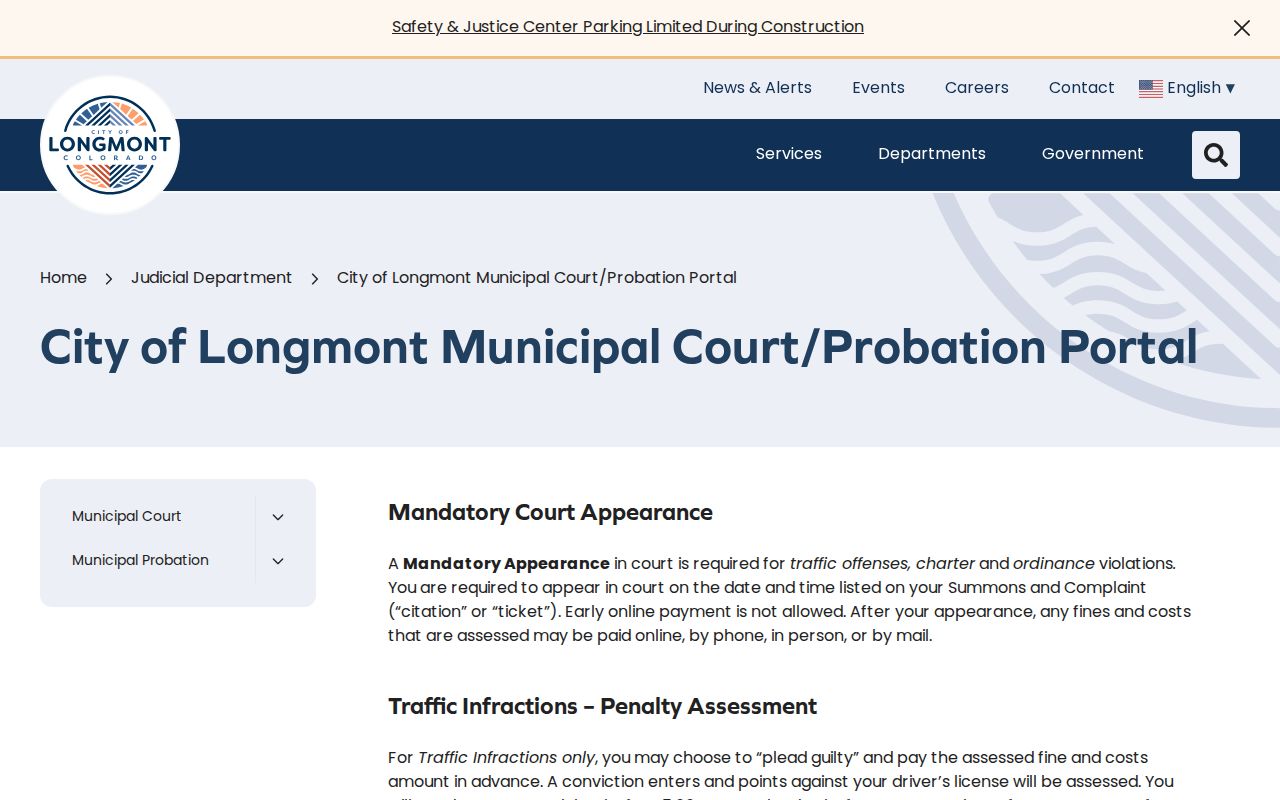
A Boulder County portal balance or case page is not final proof the warrant changed. Confirm directly with the clerk.
Boulder County Bench Warrant Records
A Boulder County bench warrant record can list the case number, court and division, the missed appearance or compliance reason, issue date, bond, hearing date, and status. Public access may omit sealed, juvenile, or protected facts. A docket row is not the file.
| Case number | Year, class, and sequence identifying the court file. |
|---|---|
| Failure event | The missed hearing or condition recorded in the ROA. |
| Warrant type | Bench, FTA, failure to comply, or another court label. |
| Bond | A court-set amount or no-bond condition. |
| Add-on date | The assigned walk-in or scheduled hearing. |
| Status | Active, served, recalled, quashed, or canceled. |
Ask the Boulder County clerk for the current entry. A copied record can lag behind a new judicial order.